
Discover Gelo di Mellone, Sicily’s classic watermelon pudding: a refreshing, jasmine-scented no-bake dessert with Modica chocolate.
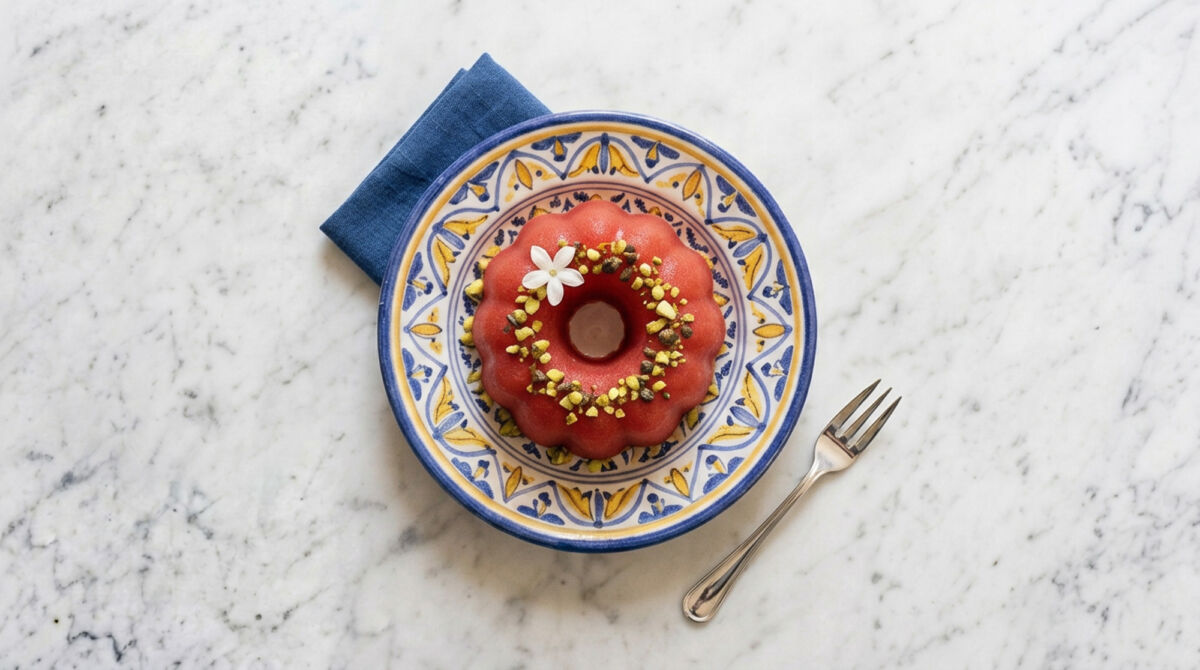
GELO DI MELLONE
read more...
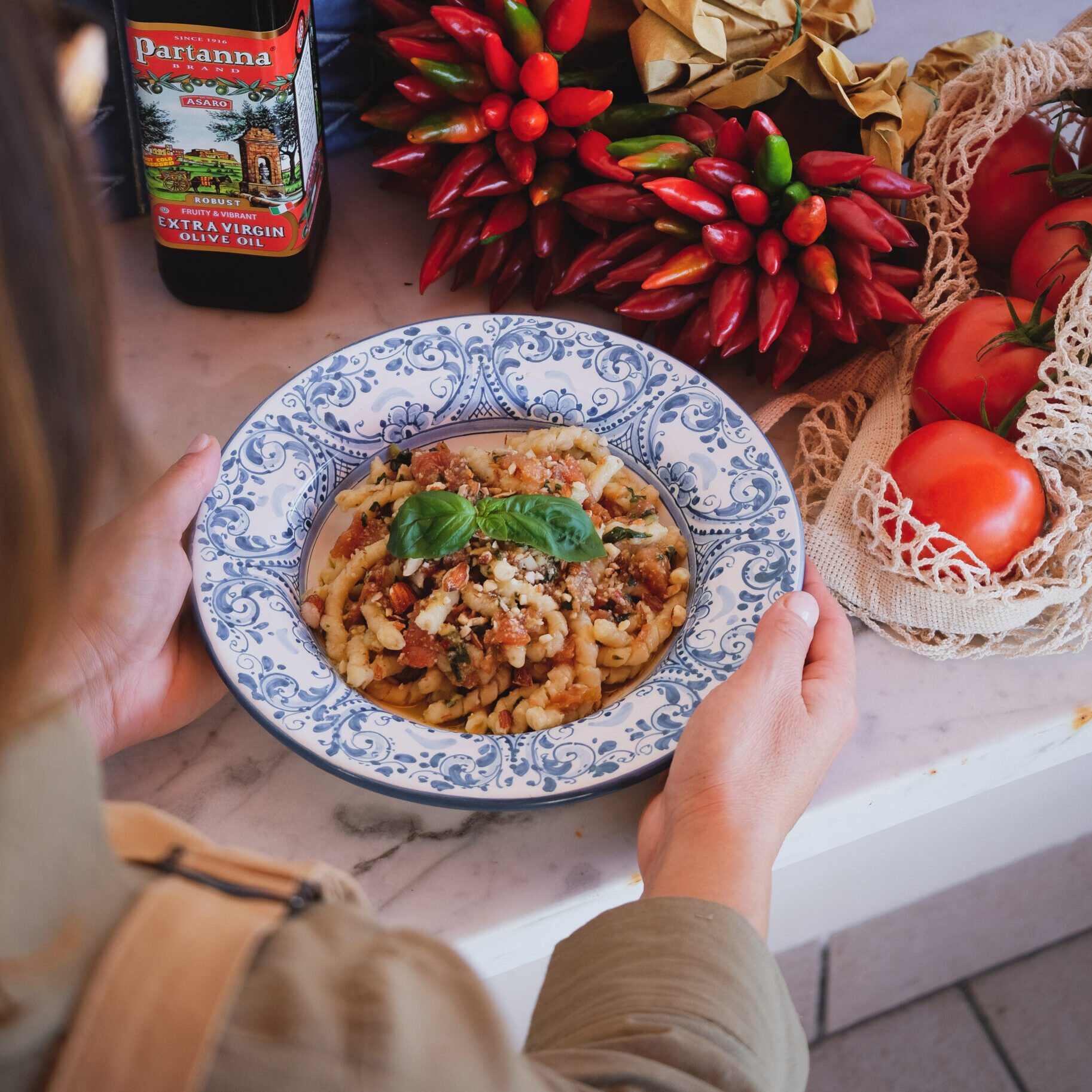
Simple, fresh, and deeply connected to Sicilian tradition, this recipe comes from the province of Trapani, a coastal area where Arab influences, Mediterranean ingredients, and generations of family cooking come together in one of Sicily’s most iconic pasta dishes.
READY IN 25 minutes
DIFFICULTY easy
SERVINGS 4
400g (14 oz) busiate pasta
250g (8.9 oz) ripe cherry tomatoes
80g (2.9 oz) almonds
Fresh basil leaves
1 garlic clove
50g (1.8 oz) pecorino cheese
Extra virgin olive oil
Salt and black pepper
A few toasted almonds for topping

STEP 1:
To make Trapani-style pesto pasta, place the garlic and salt in a mortar (or a food processor) and pound until the garlic is reduced to a paste. Then add the almonds (you can use either blanched or unblanched almonds, or a mix of both, as desired) until they are coarsely chopped, not too fine. Add the basil and stir in the extra virgin olive oil.
STEP 2:
Chop the tomatoes (if you like, you can also peel them by blanching them first for a few seconds in unsalted boiling water). Add the tomatoes to the mixture of garlic, almonds, and basil. Pound for a few seconds, then emulsify everything with a little more oil. Add grated pecorino and store in the refrigerator. It’s ideal to prepare Trapani-style pesto a few hours in advance so it can rest and develop its flavor.
STEP 3:
Cook the busiate in salted boiling water until al dente. Mix the hot pasta with the pesto and finish with extra pecorino cheese, basil, and a drizzle of Sicilian olive oil.
WHAT ARE BUSIATE?
Busiate are a type of pasta with a distinctive spiral shape, created by winding the dough around a rod called a “buso.” They have their roots in the Arab tradition that influenced western Sicily during the Middle Ages, a period when the practice of drying and shaping pasta in this way became widespread.
NOT ONLY A PASTA SAUCE
You can also use Trapanese Pesto on bruschetta, focaccia, and sandwiches as a base for fillings; with fish dishes to add a fresh, Mediterranean touch to grilled or baked fish; pair it with white meats, such as grilled chicken or turkey; or use it to dress grilled vegetables, such as eggplant, or flavor fresh tomato salads.
THE ORIGINS OF PESTO
Trapanese Pesto originated in Trapani, Sicily, as a local variation of Genoese pesto, which was brought to Sicily by Ligurian sailors who stopped at the port during medieval trade routes. The local recipe was adapted to use regional ingredients: almonds, tomatoes, garlic, basil, and extra virgin olive oil.
Did you like this content? Share it with whoever you want.
Stay up to date on new recipes, articles, discounts, new product
releases, and much more.
Discover Gelo di Mellone, Sicily’s classic watermelon pudding: a refreshing, jasmine-scented no-bake dessert with Modica chocolate.
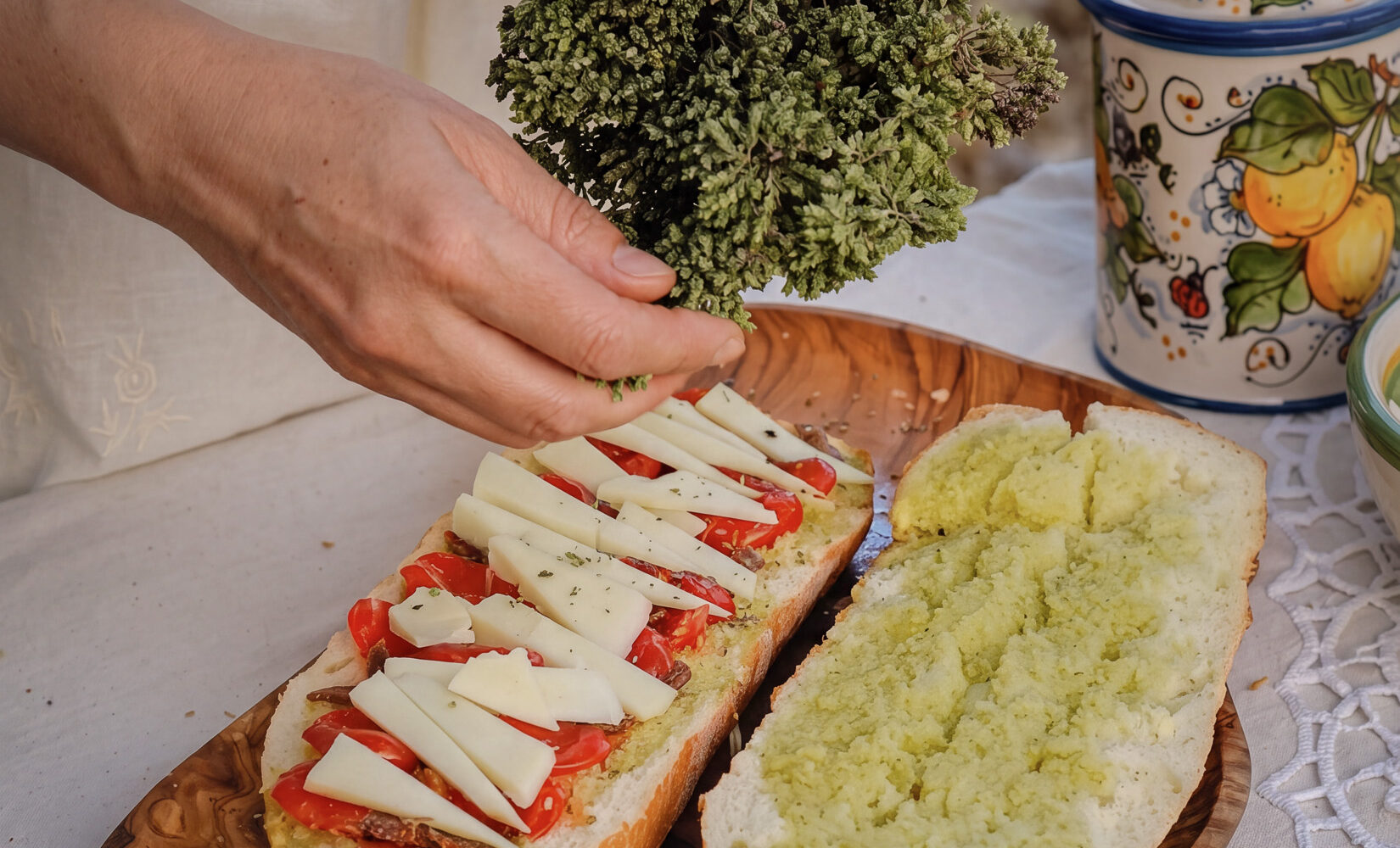
Discover the traditional Pane Cunzato recipe, Sicily’s iconic seasoned bread made easy to prepare and packed with authentic Sicilian flavor.