
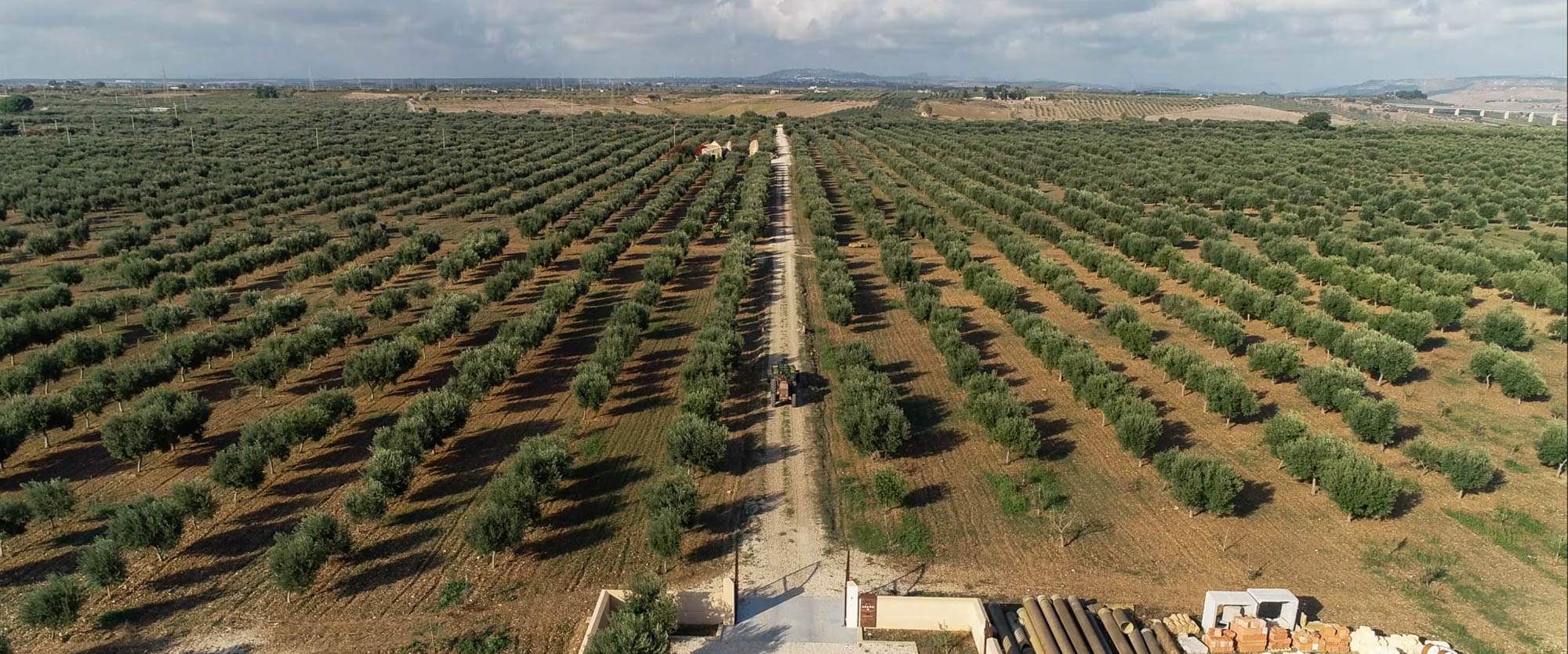
Discover the Belìce Valley in western Sicily, where olive groves, vineyards, charming towns, and authentic local traditions await beyond the tourist trail.
THE BELICE VALLEY: A GEM WORTH EXPLORING
read more...
Palermo is loud, layered, and unlike anywhere else in Italy. Its history reads like a greatest hits of Mediterranean civilization: Greeks, Romans, Arabs, Normans, Spanish, and Bourbons all left something behind, and nowhere is that collision more alive than in the city's open-air markets.
READING TIME:5 MINUTES
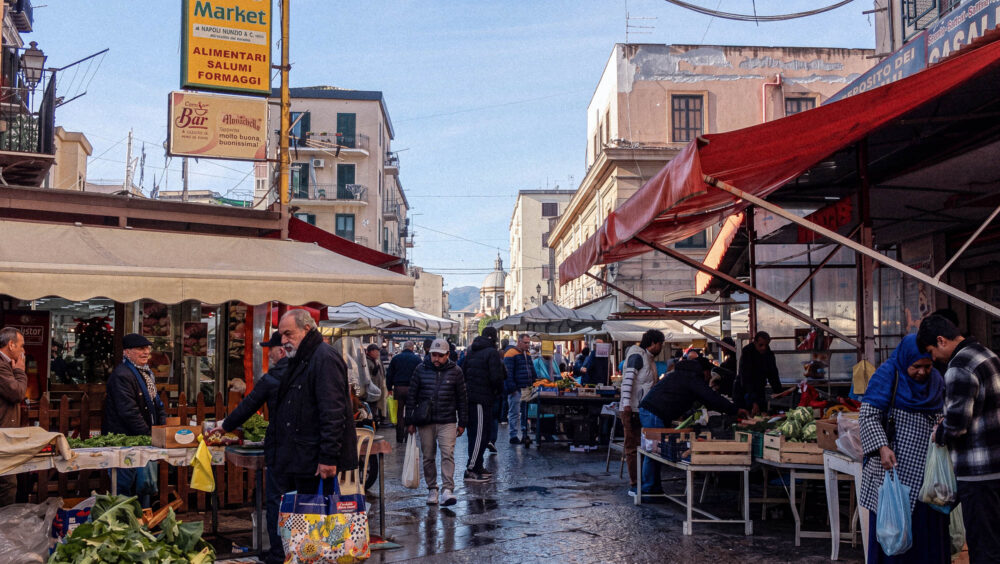
If at some point in your life you have visited both a North African city such as Marrakech and Palermo, then you have probably felt one. And if you have never been to Africa, Palermo’s historic markets offer a unique opportunity to discover two cultures living side by side. These markets, which date back to the Arab rule of the city, closely resemble the souks of North Africa and the Middle East: squares that flow into narrow alleyways lined with stalls overflowing with goods, vibrant palettes created by seasonal fruits and vegetables, meat, fish, spices, dried fruits, and every kind of Sicilian street food. The atmosphere is lively and energetic, driven by the voices of vendors who, sometimes out of necessity but often for fun, create inventive chants to attract passersby to their stalls. As in many Arab cities, Palermo’s markets reflect the soul of the city and its people: they are not only places of commerce, but also spaces where different cultures, traditions, and personalities meet. From this picture, it is easy to understand Palermo’s spirit: colorful, witty, cheerful, and cosmopolitan. These markets are therefore unmissable stops for anyone visiting the city, but also for those who live there. Every true Palermitan knows exactly which market to choose depending on what they need to buy.
Below is a guide to Palermo’s four main markets, helping you decide whether to visit them all or focus on the ones that best suit your interests.
Located between Piazza Casa Professa and the bastions of Corso Tukory, Ballarò is Palermo’s oldest, largest, and busiest market. There are several theories regarding the origin of its name. One suggests it derives from Bahlara, a village near Monreale from which many goods arrived for sale. Another links it to Ag-Vallaraja, a title held by rulers of the Sind region in India, since spices from the Deccan were once traded here. A third theory connects it to the word Segeballarath, meaning “fair-market.” Originally established to sell produce from the countryside surrounding Palermo, the market now offers both fresh ingredients and ready-to-eat street food. Vendors sing out their prices through the famous abbanniate, melodic and rhythmic calls rooted in the Arab souk culture that shaped this neighborhood between the ninth and tenth centuries. You do not need to understand Italian to appreciate their rhythm. Ballarò is a daily institution in Palermo and is open every day of the week. From Monday to Saturday, it generally operates from 7:30 AM to 8:00 PM, while on Sundays it remains active mainly in the morning. Although less crowded, Sunday mornings offer a more relaxed and intimate atmosphere. Start your visit near the Church of the Gesù, walk southward, and prepare to be swept away by the intoxicating chaos that defines this extraordinary market.
It is your first time in Palermo, or even Sicily, and you want access to an incredible variety of local specialties. From arancine and cannoli to pane e panelle, sfincione, crocchè, and pane con la milza, there is simply too much to try in a single meal. Ballarò is practically permanent, meaning that no matter when you decide to visit, you will always find its vibrant stalls ready to welcome you. If you only have time for one market, this is the most iconic and representative experience Palermo has to offer.
Vucciria is Palermo’s other iconic historic market. Located between Piazza Caracciolo and Via Argenteria, its name is believed to derive from the French word boucherie (“butcher’s shop”), although in local dialect it also evokes the ideas of noise, confusion, and lively commotion. Founded during the Middle Ages as a meat market, it developed close to the city’s historic port. Today the traditional market is much smaller than it once was, but the area has retained its strong historical and cultural appeal. From morning until early afternoon, visitors can browse stalls selling fresh fish, local products, and souvenirs. In the evening, however, Vucciria transforms into one of Palermo’s main nightlife hubs, filled with bars, music, street food, and people until late at night.
You want to enjoy excellent street food during the day in a setting that is generally less chaotic than Ballarò, and then experience Palermo’s vibrant nightlife after sunset.
The Capo Market stretches through a maze of narrow streets behind the Teatro Massimo. Established during the Muslim period, it historically hosted traders, pirates, and merchants, eventually becoming one of the city’s most important centers for meat sales. Often described as Palermo’s “people’s market,” it has preserved the appearance of a traditional oriental souk through its intricate network of alleyways. Here, street vendors tempt passersby with classic Palermitan specialties such as sfincione, sfincionello, pane con la milza, pane e panelle, crocchè, and many other local delicacies. One of the market’s most striking features is the sight of large cuts of meat hanging outside butcher shops, a tradition that some associate with Palermo’s historic Jewish community and the practice of thoroughly draining blood from slaughtered animals. During certain holiday periods, it is also common to see whole lambs and young goats on display. Today, Il Capo is particularly appreciated for the quality of its fresh produce, including fish, meat, fruits, vegetables, aromatic herbs, and traditional Sicilian products. Its culinary offerings are excellent and generally less tourist-oriented than those found in some other parts of the city. The market is open from Monday to Saturday, from early morning until early afternoon.
You are looking for an authentic market experience that feels slightly more organized than Ballarò and offers an excellent introduction to Palermo’s culinary traditions.
Palermo’s Flea Market is a small paradise for lovers of antiques, vintage finds, and unusual objects. Located in Piazza Peranni, near Via Maqueda and the Vucciria district, it offers a completely different experience from the city’s food markets. Established after World War II, it emerged from a modest local economy driven by dealers who collected used items from aristocratic palaces and resold them in the area. Over time, it evolved into a meeting point for collectors, antique enthusiasts, and treasure hunters. Today, the market is often considered a permanent exhibition of Sicilian and Italian antiques. Visitors can discover antique furniture, books, prints, vinyl records, lamps, ceramics, vintage signs, collectibles, and unique pieces rich in history. In recent years, furniture and design objects from the 1960s and 1970s have become increasingly common. Far removed from the atmosphere of Palermo’s food markets, the Flea Market offers a slower and more contemplative experience centered on exploration and discovery. It is open Monday through Saturday from 9:00 AM to 5:00 PM and on Sundays from 9:00 AM to 1:00 PM.
You love vintage items, antiques, and hidden treasures, and would rather bring home a unique piece of history than a typical local souvenir.
Keep two simple recommendations in mind. The first concerns food. Always try to buy from stalls selling products that have just been cooked or fried. Observe the preparation process or simply ask which items were made most recently. While ingredients are generally fresh across the market, food that has just been prepared will always be more flavorful and enjoyable. The second recommendation concerns personal safety. Ballarò is not a dangerous place, but as in any crowded environment, it is wise to remember a simple rule that applies anywhere in the world: stay aware of your surroundings.
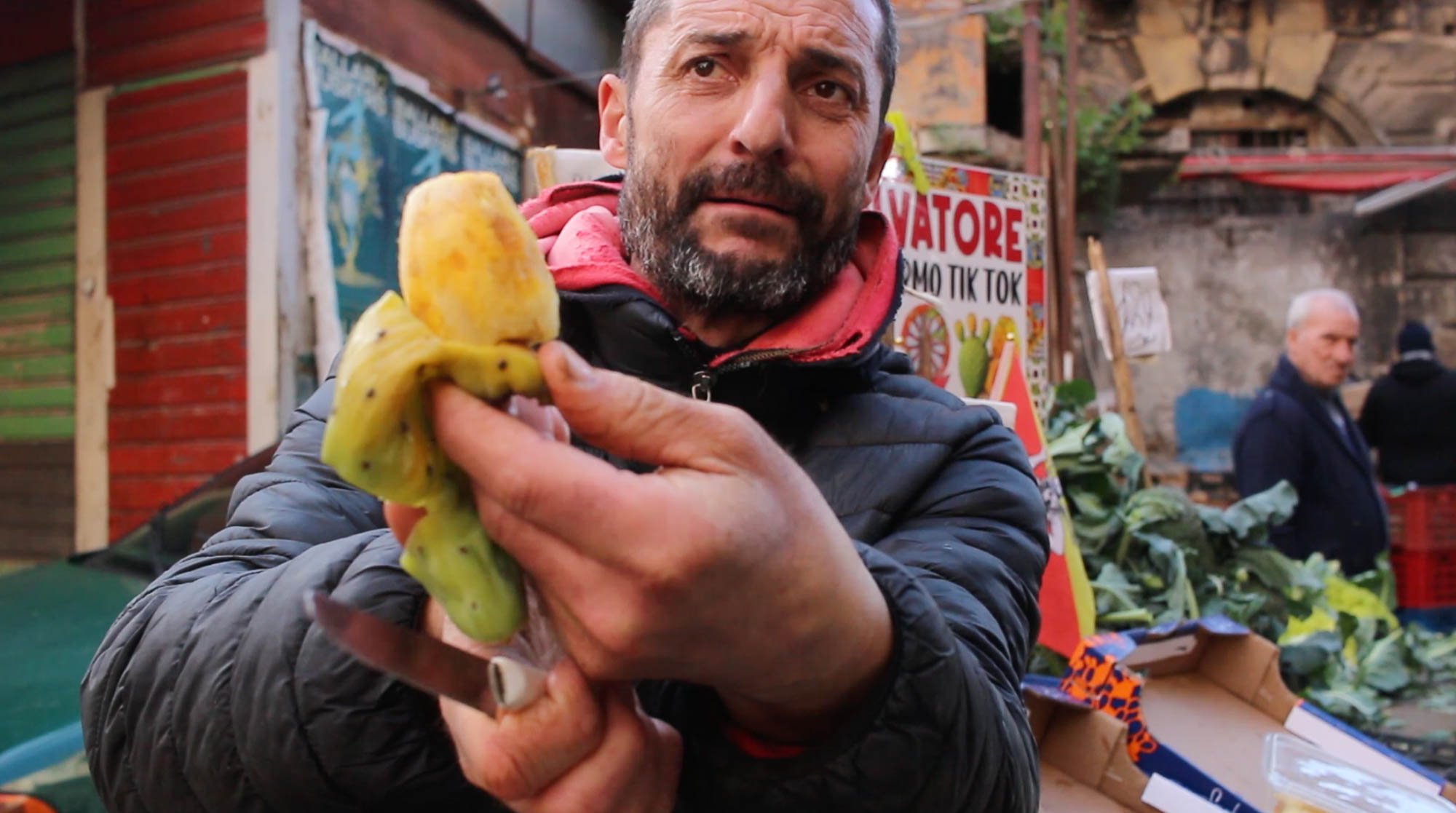
Salvatore, Ballarò'svendor, selling a prickly pear
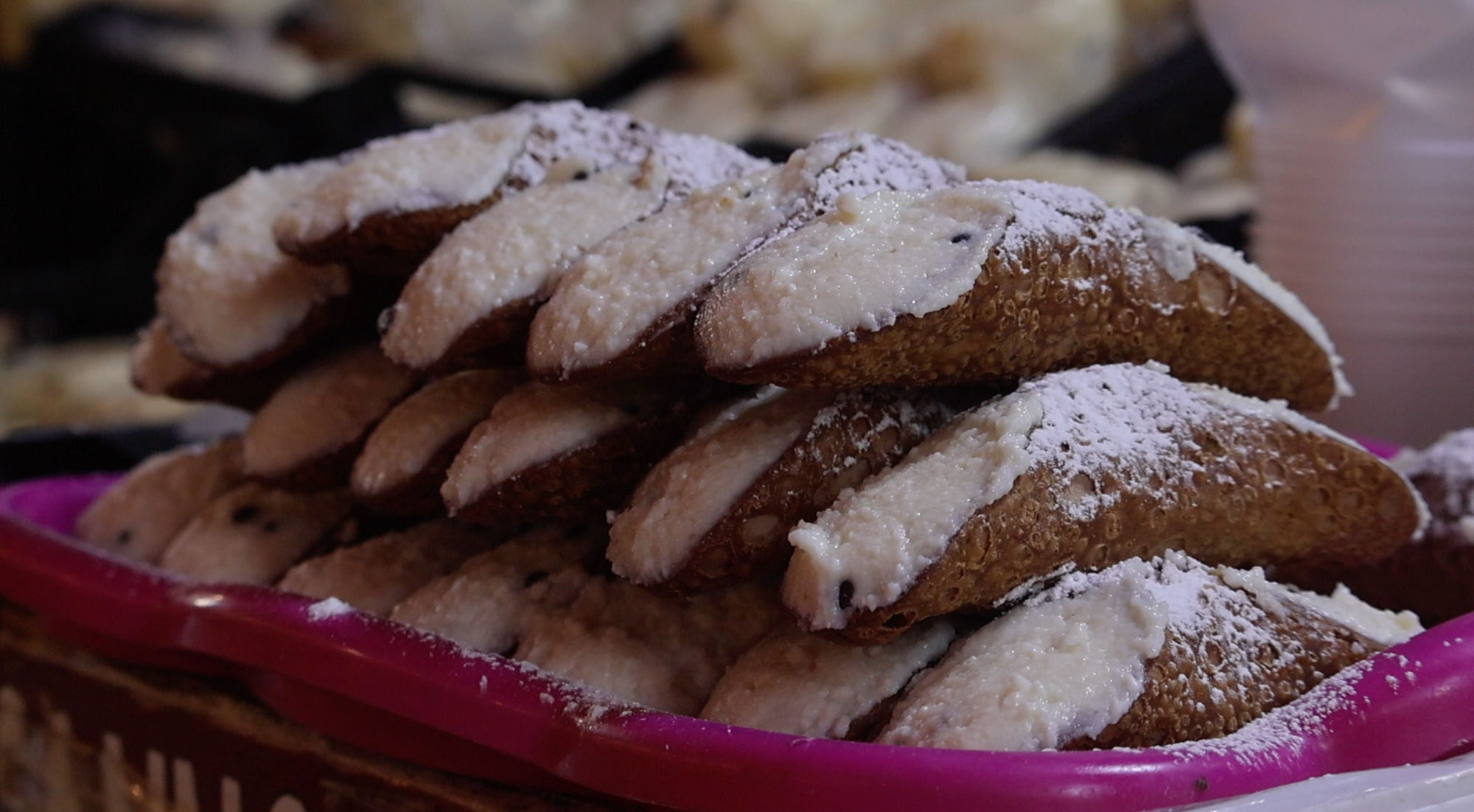
Cannoli
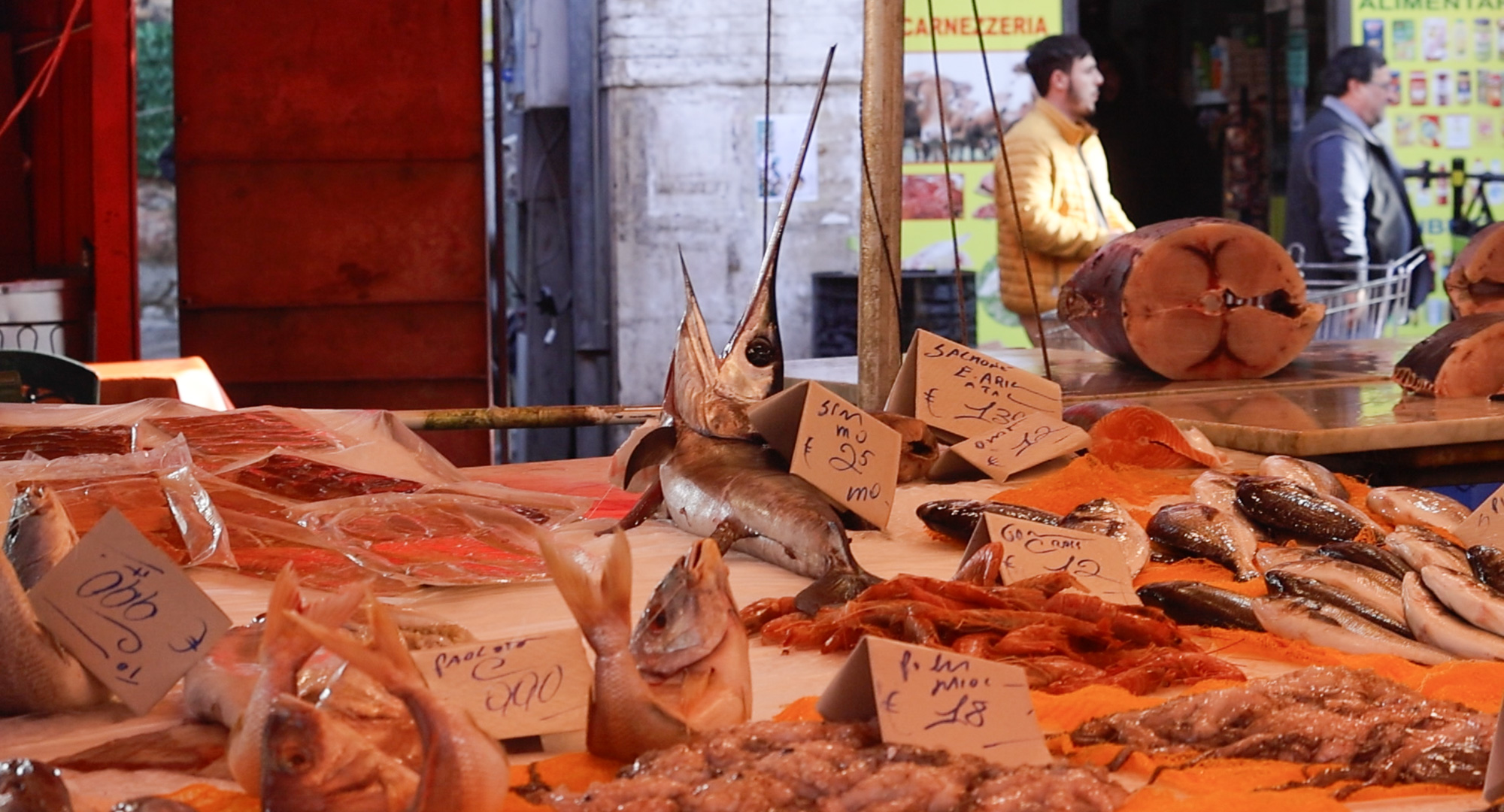
Fish counter
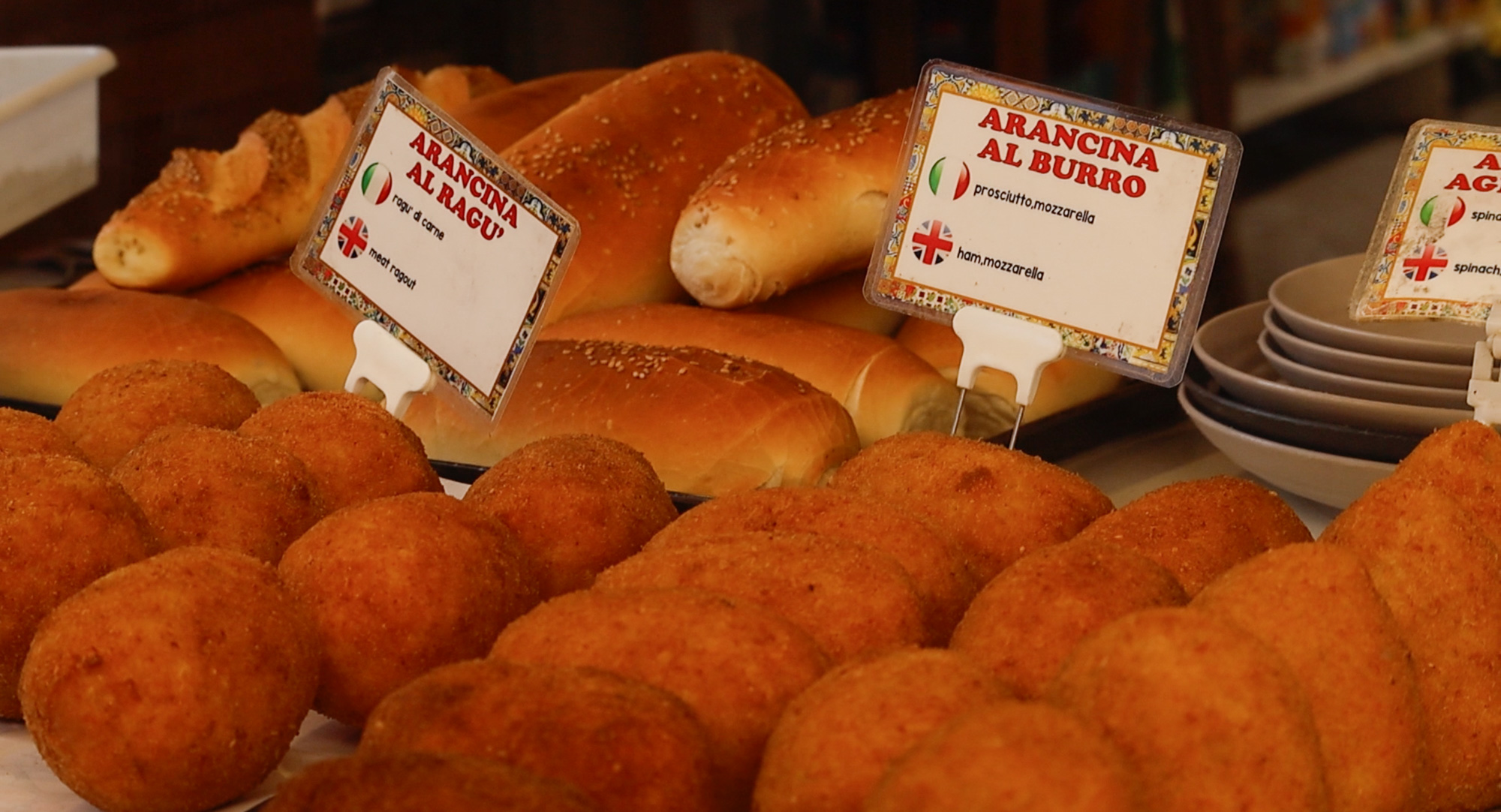
Arancine
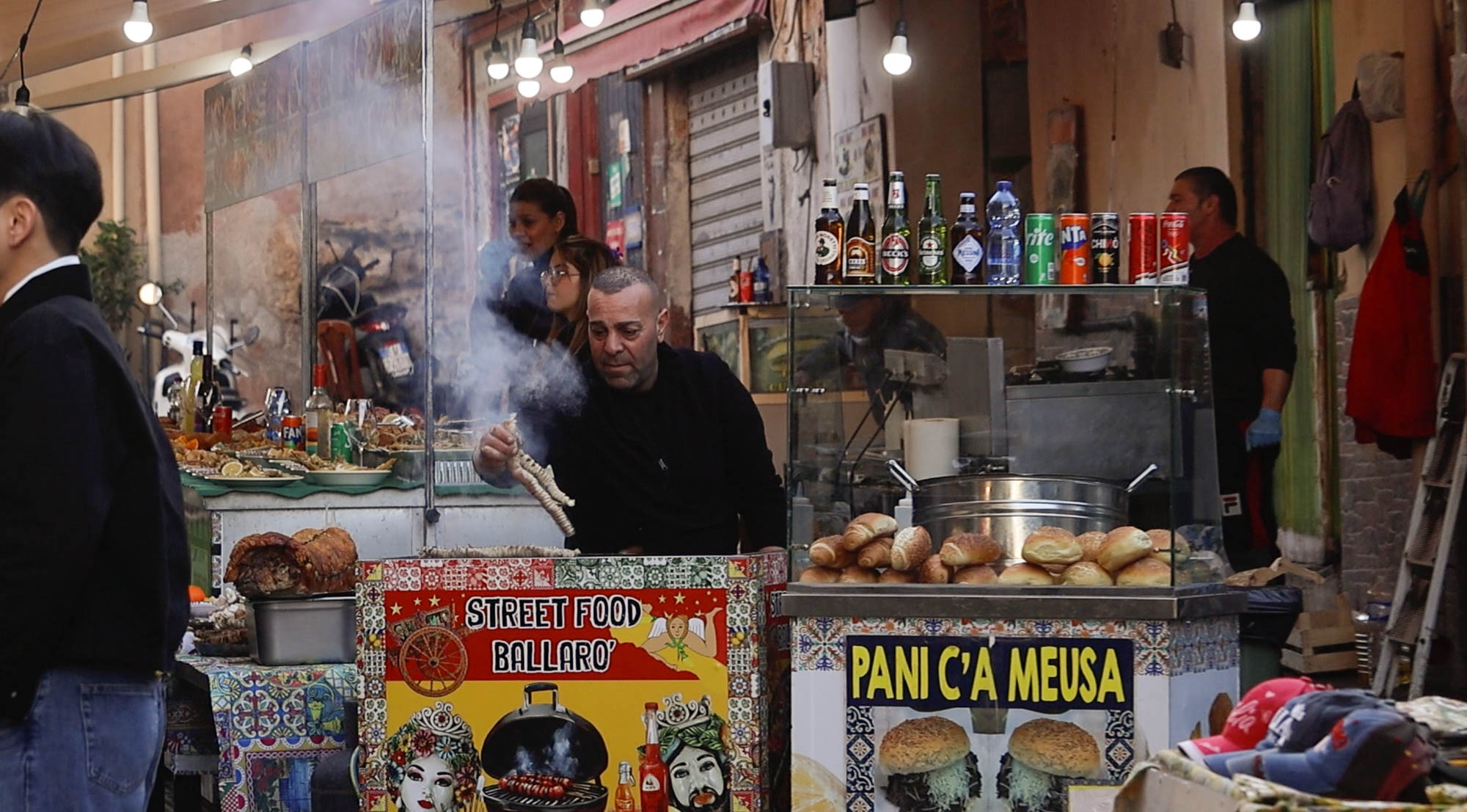
Davide, Ballarò's vendor, cooking the stigghiola
FINAL THOUGHT
Whether you choose to lose yourself in the colorful chaos of Ballarò, enjoy the lively atmosphere of Vucciria, discover the authentic flavors of Il Capo, or hunt for hidden treasures at the Flea Market, Palermo’s markets offer far more than a shopping experience. They are living pieces of the city’s history, where Arab, Norman, Spanish, and Sicilian influences continue to blend together in everyday life. The best way to experience them is to slow down, wander without a strict plan, follow the aromas, listen to the abbanniate, and allow yourself to be surprised.
STAY WITH US
Planning to visit Palermo and its historic markets? Complete your western Sicily experience with us. From welcoming accommodation to food tours and Extra Virgin Olive Oil tastings, we’ll help you discover the authentic side of this extraordinary corner of the island.
DIFFICULT CHOICES
With so many incredible places to see, experiences to enjoy, and flavors to discover, planning a trip to Sicily is never easy. Explore the island’s highlights, get inspired, and decide which adventures to include this time, and which to save for your next Sicilian getaway.
COOK LIKE A REAL SICILIAN
When you visit Sicily, you bring back the flavors, aromas, and traditions of one of Italy’s richest culinary cultures. Explore our recipes and learn how to prepare the dishes that made you fall in love with the island, so you can keep a taste of Sicily alive long after your journey ends.
Did you like this content? Share it with whoever you want.
Stay up to date on new recipes, articles, discounts, new product
releases, and much more.
Discover the Belìce Valley in western Sicily, where olive groves, vineyards, charming towns, and authentic local traditions await beyond the tourist trail.
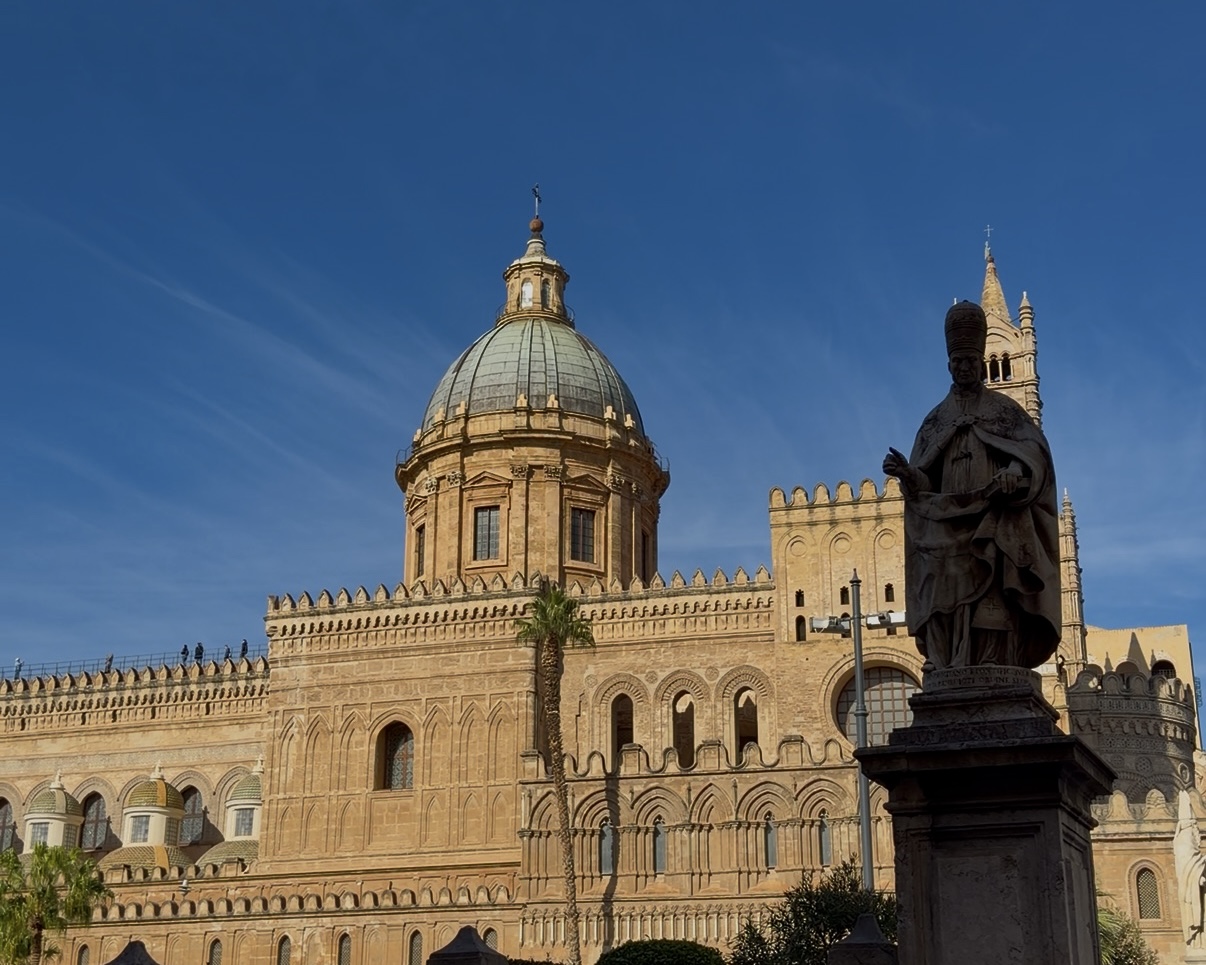
Discover the best of Western Sicily with our local guide to the island’s most authentic experiences, flavors, and hidden gems.